
Search Contract Jobs*
Hello!
You’re now leaving the Expedia Group careers site and will be directed to our supplier partner’s website to explore and apply for contract job opportunities with Expedia Group. The website is operated by Expedia Group’s employment partner.
*currently only offered in USA & UK

Jobs
Search Expedia Group Jobs
From Complexity to Clarity: Building GenAI for Travel with Manish

Behind every great AI experience is infrastructure that makes it possible. At Expedia Group, recently appointed Director of Software Development Engineering, Manish Dewan, is leading the work to build that foundation, by enabling teams to deliver smarter, more personalized travel experiences at scale. In this blog, he breaks down why GenAI infrastructure matters, and how it’s accelerating innovation across the company.
Manish Dewan | Director, Software Development Engineering | Gurgaon, India
Why Gen AI Infrastructure Matters for Travel.
Travel is uniquely complex for AI because personalization in travel is inherently longitudinal, transactional, and real-time. A great travel experience depends on understanding a traveler not just in the moment, but across the entire journey — from inspiration and search to booking, servicing, loyalty, and disruption handling. Those signals are often captured in different funnels and systems, so AI has to build and use long-term memory across fragmented touchpoints.
At the same time, travel decisions are constrained by constantly changing inventory, pricing, business rules, and operational realities. So the AI can’t rely only on a general-purpose model; it has to combine personalization memory, real-time grounding, and transactional accuracy.
That’s why strong infrastructure is essential. We need infrastructure that can unify traveler memory across channels, connect to live supply and policy systems, orchestrate actions reliably, and enforce guardrails around privacy, trust, and correctness. And because travel has highly domain-specific intents and language, this is also an area where fine-tuned or domain-adapted models matter — they help the AI understand travel context more precisely and deliver personalization that is actually useful, not just conversational.
The Core of the Platform – What We’re Building.
Our GenAI platform is the shared foundation that helps the company turn AI potential into real customer value. And my team’s role is to make GenAI easy to adopt, no matter who is building with it. For some teams, that means giving non-technical or low-code users simple ways to create AI-powered workflows and automations. For more advanced builders, it means providing the core capabilities they need so they can focus on solving business problems. Our goal is to reduce complexity, increase reuse, and provide the guardrails needed to scale GenAI responsibly. That allows teams to focus less on infrastructure and more on delivering value.
Successful AI adoption requires support for different personas. Business users need simple, low-code ways to create workflows, but engineers need to build sophisticated AI applications. The platform helps bridge that gap. What matters most is that we make this possible in a way that is practical for an enterprise environment, so that it’s secure, governed, reusable, and scalable. Instead of every team starting from scratch, they can build on a common platform with the right guardrails already in place. The platform is designed to solve the core barriers that often slow enterprise AI adoption: fragmentation, duplication, and lack of standardization. I see it as an accelerator: it helps our teams experiment faster, build more confidently, and deliver better AI-powered experiences for our travelers and partners.
For Engineering teams: it provides managed capabilities such as secure model access, embeddings, short-term and long-term memory, and SDKs with support for interoperability protocols like AGUI and A2A. This allows them to evaluate different LLMs and build agentic applications without spending time rebuilding common infrastructure.
For product teams: the platform shortens the path from concept to validation. Teams can build on enterprise data, create assistants and agents for internal productivity and customer use cases, with natural language plus existing tools as a starting point for innovation. Our GenAI registries for MCPs, agents, and skills also improve discoverability and reuse, enabling teams to assemble workflows from proven building blocks rather than starting from scratch.
The result is faster iteration, greater reuse, and a more scalable path to GenAI adoption across the organization.
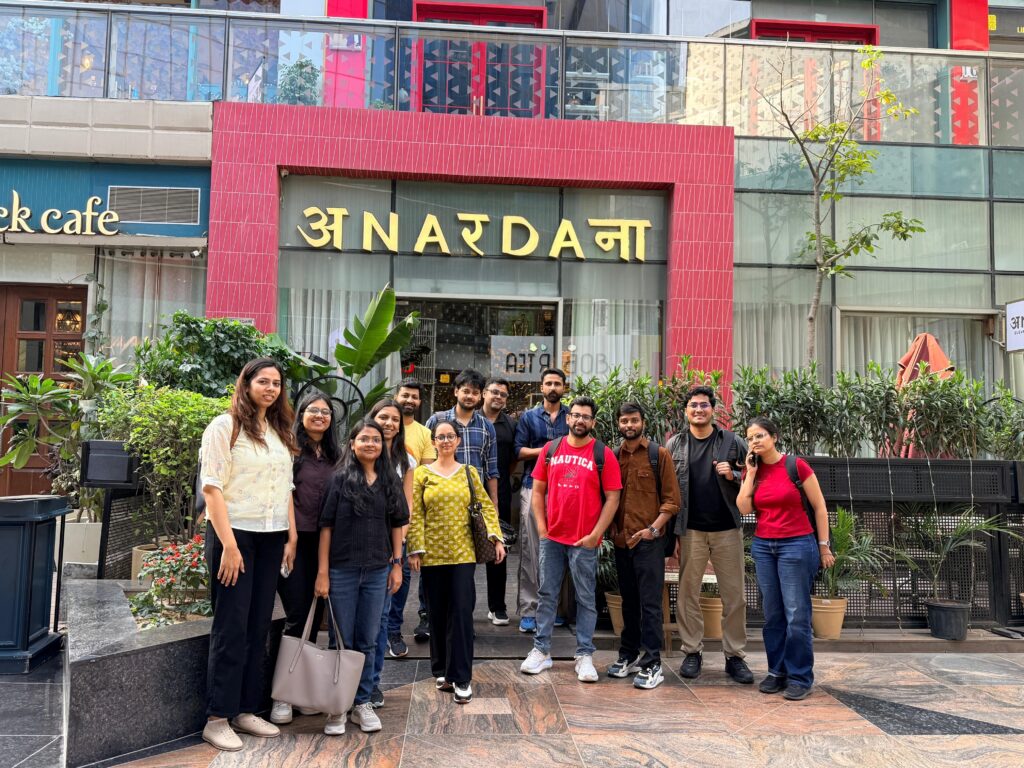
My Career Journey in AI.
Looking back, I think a lot of my career naturally led me to this role. I’ve always been drawn to building things that have broad impact. That way of thinking is very relevant in platform work, because the goal is to make complex technology easier, more reusable, and more accessible for others.
I’ve also spent a lot of time working across teams and navigating the balance between speed, user experience, and organizational needs. That’s especially important in GenAI, where you want to enable innovation quickly, but you also have to think about security, governance, and how to scale responsibly.
At the same time, every stage of my career has reinforced the importance of staying curious and adapting as technology changes. GenAI may be the current focus, but the mindset behind it is familiar: keep learning, stay close to user needs, and build in a way that creates lasting value.
That combination — platform thinking, cross-functional leadership, and comfort with change — has shaped the focus I bring to my current role.
Join us to build the world of travel.
Ready to build what’s next in travel tech? Explore open opportunities at Expedia Group and join us in shaping the future of travel.