
Search Contract Jobs*
Hello!
You’re now leaving the Expedia Group careers site and will be directed to our supplier partner’s website to explore and apply for contract job opportunities with Expedia Group. The website is operated by Expedia Group’s employment partner.
*currently only offered in USA & UK

Jobs
Search Expedia Group Jobs
How 7 Expedia Group Interns Helped Shape the Future of Travel
The future of travel is shaped by people who are curious enough to ask new questions and determined enough to find better answers. This summer, over 280 Expedia Group interns brought that spirit to life.
Across teams and business areas, they took on real-world challenges and helped develop solutions that enhance experiences for travelers, suppliers and colleagues alike. Meet seven interns from across the program as they share their projects, biggest takeaways and lessons from their time with us.
Widyayuki Triyono | Software Development Engineering Intern | London, England
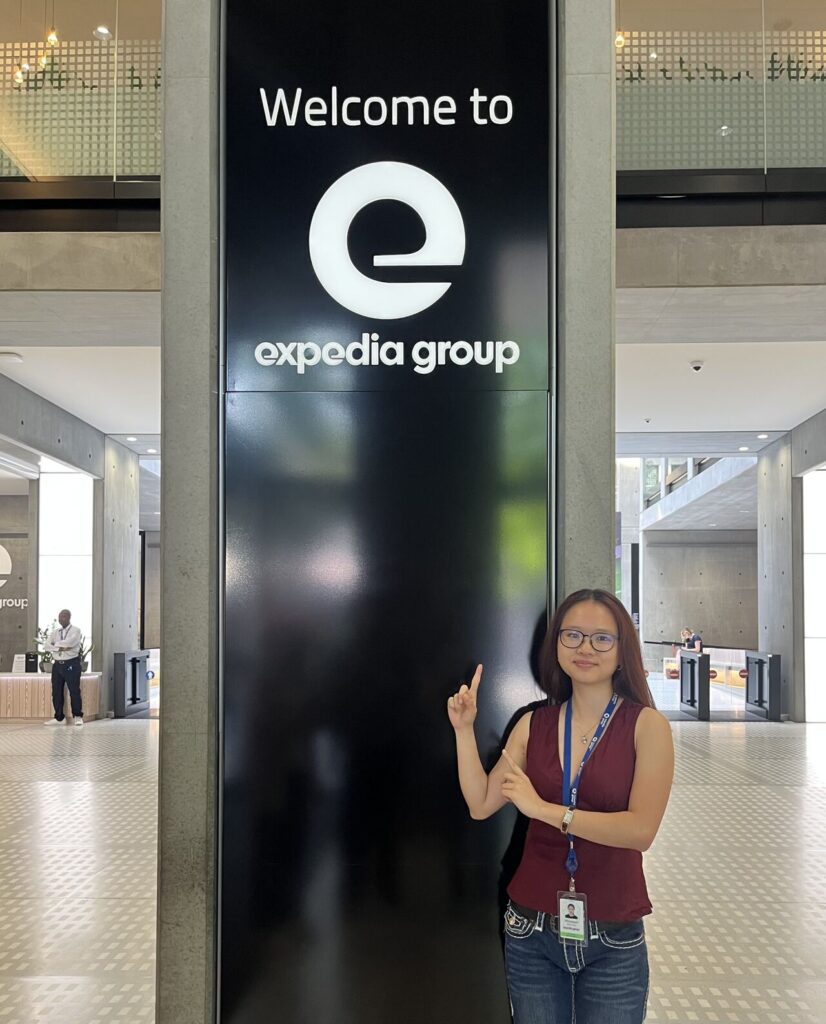
What did you work on?
This summer, I worked on improving how property photos are displayed to travelers. I helped move the part of the system that crops images into a shared image service, so photos can be handled more consistently.
I designed how the new settings would work, built the changes and tested them with a small group of users before rolling them out more widely. I also helped test a smarter way of cropping photos so the main subject stays visible. It was incredibly fulfilling to work on something travelers will see and benefit from directly.
What did you takeaway?
Working on a system used by many travelers taught me how much planning goes into changes that may look simple on the surface. I was involved from understanding the original setup and testing ideas to launching the final update and checking that it worked as expected.
I also learned that software engineering is about more than writing code. Clear communication with different teams and a shared understanding of the goal are important to a successful launch. I also learned how AI can help speed up development while still requiring people to use good judgment.
Harsh Mamania | Machine Learning Sciences Intern | San Jose, California
What did you work on?
As part of the Data & AI team, I worked on ways to test and improve AI systems that can complete travel-related tasks. I focused on understanding when these systems make mistakes and how to identify the step where things went wrong.
For one project, I built a way to trace a problem through a chain of AI helpers, tools and handoffs, so teams could see what caused it and what needed to be fixed.
My second project focused on testing a travel-shopping AI assistant. I helped create automated checks to see whether it compared properties accurately, handled prices and budgets correctly, used trustworthy travel information and gave useful answers even when there was no single correct answer.
What did you takeaway?
I learned that the system used to judge an AI’s answers needs to be checked carefully too. Once, what looked like a problem with the AI assistant was actually a problem with the checker.
My biggest takeaway is that for AI systems to be useful, teams need clear ways to see, understand and fix what is happening behind the scenes. Being able to understand how an AI system works is just as important as what it can do.
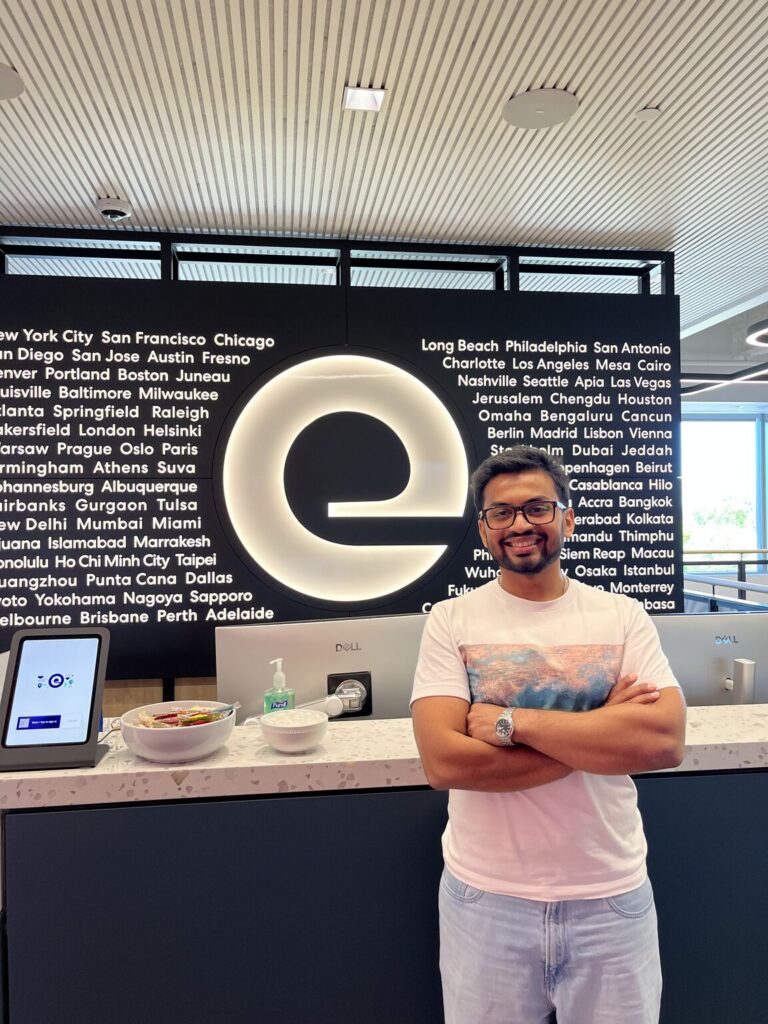
Shrey Jaiswal | Cloud Engineering Intern | Bangalore, India
What did you work on?
I spent my internship with the Business Continuity Management team within eIT. The team helps make sure important services can keep running when something unexpected happens.
During the internship, I created a central website for my team to store and find important information. The site went live and became a main place for the team to access its documents.
I also set up a process that uses AI to find updates in our existing document system, Confluence, and copy them to the portal. The process checks the information and helps keep it up to date. I improved the look and feel of the site and added features so it was easier to use.
What did you takeaway?
I learned more about how teams prepare for disruptions, recover from problems and keep important services running. I also learned how to apply technical skills to solve a real workplace need, how teams work together and why it is important to align my work with the team’s goals.
One lesson I will always remember is that taking time to find the best way to solve a problem can greatly reduce the amount of manual work needed.
Oleksandra Fenoga | Software Development Engineer Intern | London, England
What did you work on?
I spent my 10-week internship as a Software Development Engineer Intern on the Personalization team, which works to enhance the traveler experience across Expedia Group’s brands.
For my project, I built an internal tool to simplify debugging issues related to an individual traveler’s personalization. The goal was to make it easier for engineers and non-technical stakeholders to access traveler personalization data and understand a traveler’s history without writing SQL.
I had the opportunity to work on the project end to end, from designing the interface and building the core functionality to communicating with internal stakeholders and incorporating their feedback. I am excited that the tool is now live and giving teams a simpler way to explore personalization history and troubleshoot related issues.
What did you takeaway?
As my first work experience, this internship gave me the opportunity to apply what I had learned in school while contributing to a real company serving millions of travelers. I developed both my technical and professional skills and met incredible people across my team, my intern cohort and the wider Expedia Group community.

Parineeta Soni | Software Development Engineering Intern | Gurgaon, India

What did you work on?
Over the past few months, I worked on the Modern Checkout experience within the Checkout Experience team. My focus was making critical checkout flows more resilient and reliable. I contributed to migrating a checkout loyalty repricing flow from a legacy path to a cleaner, more resilient service-driven architecture.
Along the way, I strengthened integration and smoke tests, improved rollout readiness and developed a deeper understanding of how backend engineering decisions shape the customer experience at scale.
What did you takeaway?
I learned how large-scale distributed systems are designed and evolved safely, and why “done” means reliable, testable and production-ready—not simply merged.
I also learned the importance of building systems that are safe, scalable and resilient, and how thoughtful backend engineering can directly influence the traveler experience.
Avni Dhokia | Technical Program Management Intern | London, England
What did you work on?
I worked on a project to keep legally required information up to date on Expedia Group websites operated for partner businesses. This meant managing four types of legal documents across 132 websites in more than 20 countries.
I built a reusable process that used AI to search different systems for updates and add the right information to our website content tool. I also led a training session to show my team how AI could help with repetitive tasks.
What did you takeaway?
The project showed me how information is created, adapted for different countries and kept current across many websites. I learned that AI can help with repetitive work, while people still need to review important legal information.
It also taught me that technology should be used carefully when accuracy and legal requirements matter.
Dominic Bankovitch | Data Science & Analytics Intern | Seattle, Washington

What did you work on?
I worked with the Fraud Risk team, looking at how Expedia Group’s systems protect travelers and suppliers from fraud.
I worked on two projects. First, I looked at what happened when travelers were mistakenly blocked, including whether they were able to book again and how long it took them to do so.
Second, I studied what happened to supplier accounts that were mistakenly blocked by login security measures.
Both projects helped the team understand the effects of blocking the wrong people and find ways to protect users while creating a better experience for travelers and suppliers.
What did you takeaway?
I learned how to use data to understand what happens after a fraud decision, not just whether someone was blocked. I also learned how to compare outcomes over time to understand whether a security measure was helping or causing problems.
Most importantly, I learned that protecting people from fraud needs to be balanced with making sure legitimate travelers and suppliers can use the service easily.
Join our Career Network
We’re looking for outstanding talent to join us on our mission to power global travel for everyone, everywhere. By joining our career network, you’ll have exclusive access to our latest opportunities, events, interview advice, and global insights from our Expedia Group leaders. Sign up now!